

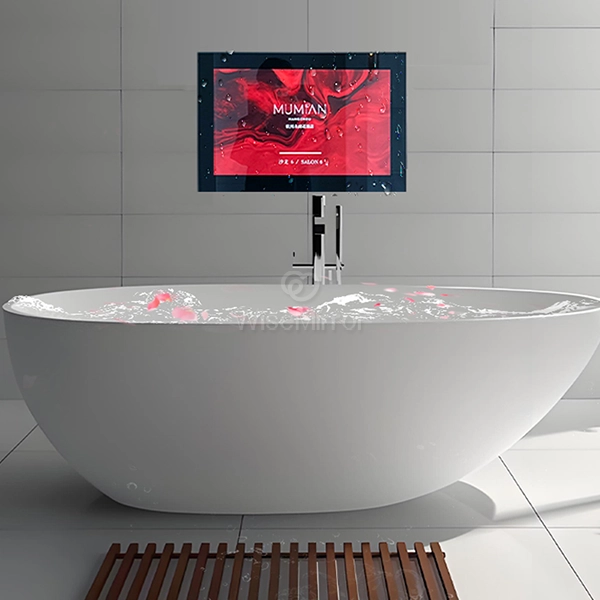
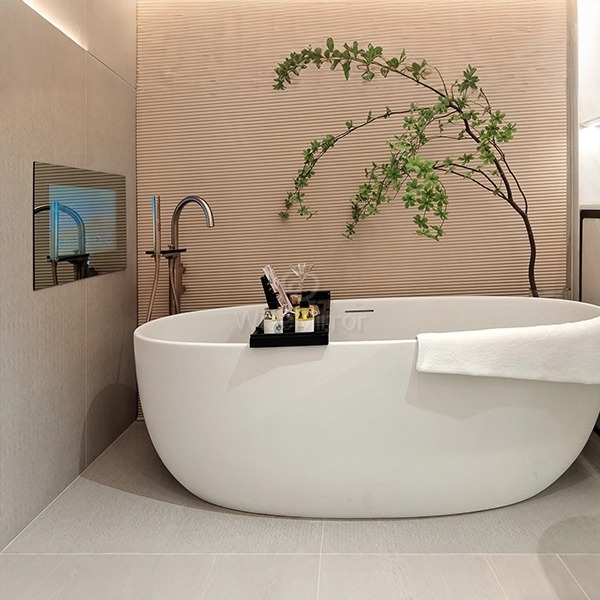

IP65 vs. IP66 Waterproof TVs for Bathrooms: What Is the Difference?
When specifying display technology for commercial bathroom installations — whether for a five-star hotel project, a luxury residential development, or a high-end spa facility — the IP rating printed on a product datasheet is not a minor detail. It defines whether the unit survives three years of daily use or fails within the first service cycle. A waterproof TV in the bathroom must be rated correctly for its exact installation zone. This article breaks down what separates IP65 from IP66, and how procurement teams, hotel engineers, and fit-out contractors can apply that knowledge to sourcing decisions with confidence.
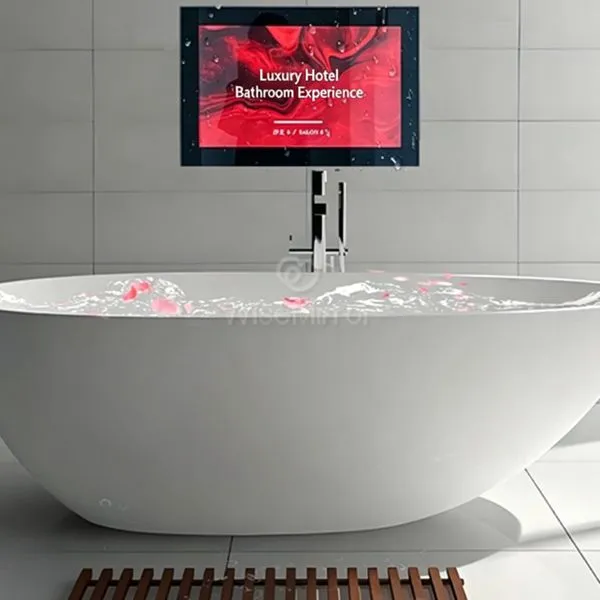
Understanding IP Ratings: IP65 vs. IP66 for Bathroom TVs
IEC 60529 is used as a guide for IP grades. The first number in each grade tells you how much dust or liquid the product protects against.
What Does IP65 Actually Mean?
IP65 means that the cover can't let any dust in (rated 6) and can't be hit by low-pressure water jets from any direction (rated 5). In the bathroom, IP65 is fine with steam, humidity, and small splashes of water. It can be used near sinks, in open bathroom hallways, or on walls next to steam vents where water doesn't directly touch the surface.
What Does IP66 Add?
IP66 has the same dust-tight rating as IP65, but for a waterproof smart mirror, it adds better protection against liquids by blocking strong water jets coming from any direction. This is what the IEC 60529 standard calls a 100-liter-per-minute flow rate at 100 kPa pressure. This means that IP66 is the right standard for walls next to showers, wet rooms, and any other area that could be sprayed directly.
Why the Difference Matters for B2B Projects?
If hotel building teams and business fit-out contractors give the wrong IP rating, they are responsible. An IP65 unit put in a shower area might pass the first inspection, but it will start to break down after a few months. Before accepting any unit for high-moisture zones, procurement teams should ask for third-party IP test certificates instead of just product labels.
Why Choose Waterproof TVs for Bathrooms: Benefits and Use Cases?
In the bathroom, a normal home display breaks down very quickly. PCBs inside break down, screens fog up, and speaker cones soak up water. If you get the right rating for your Waterproof TV in the Bathroom, these failure modes are stopped at their source.
Performance Longevity in Commercial Settings
Five-star hotels clean Bathroom TVs twice a day with chemicals, use a lot of steam from the shower, and run them continuously for 18 hours. Powder-coated stainless steel housings, anti-oxidation coatings, and sealed speaker assemblies have been shown to last more than five years in these conditions, while unrated alternatives only last less than one year.
Zone-Specific Deployment in Hotel Bathrooms
Most hotel bathrooms are split into three areas: the dry area (the vanity), the damp area (the rest of the bathroom), and the wet area (the area around the shower or tub). Placements in Zone 2 (damp) are fine for IP65 units. For Zone 1 (wet) sites, IP66 units are the bare minimum. The most common procurement mistake in hospitality projects is mixing up zones.
Spa, Wellness, and High-End Residential Applications
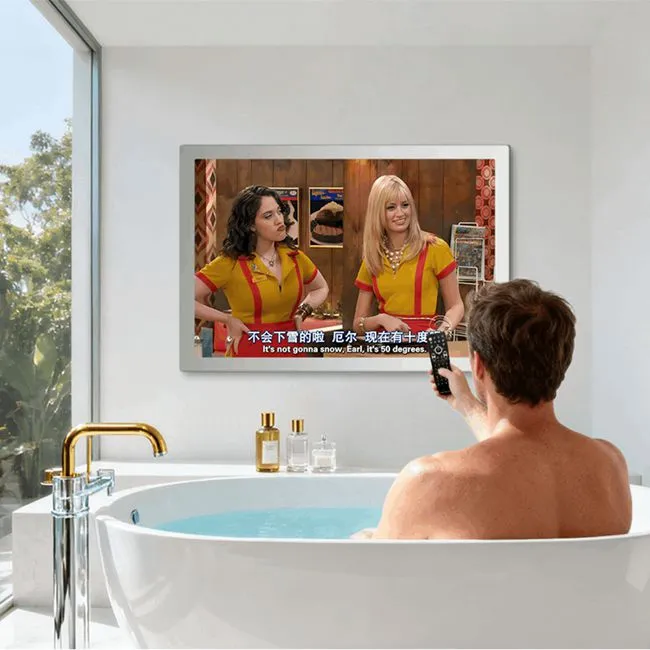
Luxury spas and high-end home builders in cities like New York, Los Angeles, and Miami are asking for in-shower video systems as a way to stand out in the design world. To meet both safety and visual standards, these places need solutions such as a waterproof smart mirror with low-voltage DC power systems, anti-fog glass with warm elements inside, and IP66 protection.
Comparison of IP65 and IP66 Waterproof TVs: Technical and Market Analysis
Understanding the differences in specifications helps procurement teams make correct RFQ papers and fairly evaluate seller offers.
Core Technical Differences at a Glance
Here's a direct look at how the two ratings compare on the factors that matter most for buying commercial bathrooms:
Protects against 12.5 liters per minute at 30 kPa; good for damp areas and steam rooms where there won't be direct contact with water spray.
High-Pressure Jet Resistance (IP66) for a Waterproof TV in the Bathroom: Protects against 100 liters/minute at 100 kPa; approved for shower enclosures, wet rooms, and areas next to pools.- IP66—Anti-Fog Requirement: **Commercial-grade IP66 units have glass heating plates inside that reach working temperature in two to three minutes, keeping condensation from forming in places with a lot of steam.
- IP65 — Water Jet Resistance: Protects against 12.5 liters/minute at 30 kPa; suitable for damp zones and steam rooms without direct water spray contact.
- IP66 — High-Pressure Jet Resistance: Protects against 100 liters/minute at 100 kPa; certified for shower enclosures, wet rooms, and pool-adjacent areas.
- IP66 — Anti-Fog Requirement: Commercial-grade IP66 units incorporate internal glass heating plates that reach operating temperature within 2–3 minutes, preventing condensation in high-steam environments.
- IP66 — Structural Durability: Housing typically uses tempered explosion-proof glass, powder-coated or stainless-steel rear panels, and silicone-sealed I/O port covers for complete moisture exclusion.
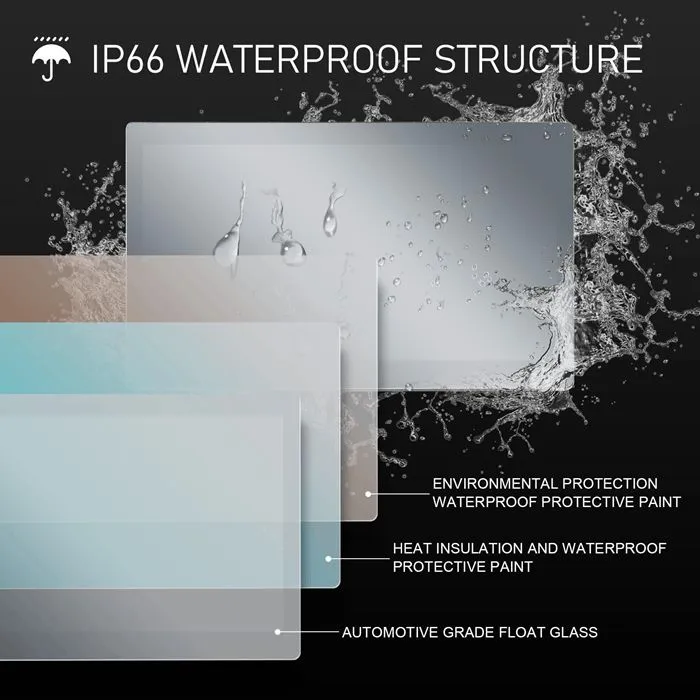
Because of these differences, there are limits on where a unit can be installed safely and what certifications the supplier must show before the project is approved.
Smart System Architecture for Hotel & Hospitality Procurement
Commercial buyers must look at more than just the IP number when they buy a system. Leading IP66 bathroom display screens now work with both TV and Android systems. This means that hotel guests can watch Netflix, YouTube, and download apps, and hotel owners can push their own material through a custom user interface. Any commercial-grade standard should have Wi-Fi, Bluetooth, HDMI, and USB ports. The units should also be able to handle PAL, NTSC, and AM signal types, as well as digital-analog combined receiving, so they can work in a variety of broadcast settings in hotels in the U.S. and other countries.
Price-Performance Positioning for Large Projects
Units with an IP66 rating cost 15–30% more than IP65 models of the same type. For developers buying 100 or more units, this extra cost is balanced out by fewer warranty claims, lower maintenance labor costs, and longer periods between asset replacements. When choosing a vendor for multi-property hotel rollouts, procurement teams should evaluate the total cost of ownership and consider whether a reliable smart mirror manufacturer can provide durable solutions that reduce long-term operational expenses rather than focusing only on the initial unit price.
Installation and Maintenance Tips for IP65 and IP66 Waterproof TVs in Bathrooms
The right installation is just as important as the right specification. If you don't use manufacturer-approved mounting tools and sealing methods on a properly rated unit, the seal will break, not the screen.
Zone Compliance and Mounting Best Practices
For shower areas, IP66 units must be placed using the waterproof mounting kit that came with the product, and all wire entry points must be sealed with the right kind of silicone. Since the front panel is sealed, there are no normal airflow cooling paths for recessed installations, so the back box needs to be ventilated to manage heat loss. In the U.S. market, all electrical connections in wet areas must follow NEC Article 410.
Cleaning Protocols That Preserve the Enclosure
Shower screens like a Waterproof TV in the Bathroom should only be cleaned with a soft microfiber cloth and a pH-neutral solution. Silicone seals will wear down over time if you use abrasives or a high-pressure direct spray on the port covers. It is standard practice in five-star hotels to check the seals, screens, and speakers every three months.
Addressing Anti-Fog Performance in Daily Operations
Units with internal heating plates should stay powered on during room turnover times to keep the glass temperature above the local dew point. In places where power-saving routines turn off the display power at nite, buying teams should make sure that the anti-fog heating circuit works separately from the main display power so that condensation doesn't build up in the morning.
How to Choose Between IP65 and IP66 Waterproof TVs: A Decision Support Guide
Choosing between IP65 and IP66 is not a matter of personal taste; it depends on where the product will be installed, how much risk the project can handle, and how much it will cost over its entire life.
Match the Rating to the Zone
Before sending out an RFQ, procurement teams should get the bathroom zone drawing for the job from the builder or fit-out provider. IP65 can be used in Zone 2 (wet, no direct spray) places. Anywhere less than 0.6 meters from a shower head, bathroom spout, or wet-room floor drain needs to be at least IP66.
Evaluate Supplier Certification, Not Just Product Claims
Ask a smart mirror manufacturer for IEC 60529 test certificates from approved third-party labs. Also, make sure that hotel projects in the U.S. follow CE, FCC, UL, and RoHS requirements. No matter how much they charge, suppliers who cannot provide traceable test documents should not be considered.
Build a Weighted Scoring Matrix for Final Selection
For bathroom displays, a useful score grid for buying should put 30% of the weight on IP certification, 25% on system compatibility and smart features, 20% on seller support and lead time, 15% on price, and 10% on warranty terms. Lifetime value measures will always show that IP66 units from makers with proven business hospitality references are more valuable than lower-rated alternatives.
Conclusion
On paper, the difference between IP65 and IP66 for a Waterproof TV in the Bathroom is small, but in business bathroom setups, it's a big deal. Most damp-zone applications can be covered by IP65. Where direct water contact is possible, IP66 is the better choice. The small extra cost of IP66 protection will always be more than the cost of specifying a lower-rated unit in the wrong zone for hotel engineers, luxury home builders, and fit-out contractors. Before agreeing to a bathroom display design, check the zone classifications, ask for certified test documents, and look at the lifecycle value of suppliers.
FAQ
Can an IP66 bathroom TV be installed directly inside a shower enclosure?
Yes. IP66 units rated to IEC 60529 standards withstand high-pressure water jets from any direction and are approved for direct shower-zone installation when mounted using the manufacturer's waterproof kit with proper silicone sealing on all cable entries.
How does the screen stay clear during a hot shower?
Commercial-grade units incorporate an internal heating plate behind the glass panel. This element activates with the power supply and maintains the glass surface temperature above the ambient dew point, preventing condensation within 2–3 minutes of startup.
Are the remote controls waterproof?
Quality bathroom display units include IP68-rated infrared waterproof remote controls, which withstand full immersion and can be operated with wet hands without risk of damage or electrical hazard.
How often should a bathroom display be cleaned, and what method is safe?
Wipe the screen surface weekly using a soft microfiber cloth with a pH-neutral cleaning solution. Avoid abrasive materials and direct high-pressure spray on port covers or seal edges. Inspect silicone seals quarterly in commercial hotel environments.
Can a regular TV be converted for bathroom use?
No. Standard consumer displays lack sealed enclosures, corrosion-resistant housings, and low-voltage safety architecture required for wet environments. Retrofitting is not a code-compliant or safe alternative to a purpose-built waterproof display.
Partner With WiseMirror Intelligent for Your Next Bathroom TV Project
WiseMirror Intelligent sells IP66 bathroom TV solutions across the United States to hotel developers, fit-out builders, and system designers. These solutions include waterproof stereo speakers built in, Android/TV dual systems, anti-fog technology, and custom structural measurements. Waterproof TV in the Bathroom: As an experienced manufacturer with more than 15https://www.wisemirror-int.com/about-us years of experience, we can handle large orders with a 30-day lead time and full CE, FCC, UL, and RoHS approval. You can email our sales team at info@wisemirror-int.com or go to wisemirror-int.com to get project details and prices.
References
1. International Electrotechnical Commission. IEC 60529: Degrees of Protection Provided by Enclosures (IP Code). IEC, 2013.
2. National Fire Protection Association. NFPA 70: National Electrical Code (NEC), Article 410 — Luminaires, Lampholders, and Lamps. NFPA, 2023.
3. CE Marking and EMC Directive for Display Products. European Commission Directorate-General for Internal Market, 2014.
4. Hospitality Technology: In-Room Technology Trends in Luxury Hotels. Hospitality Technology Magazine, 2022.
5. International Organization for Standardization. ISO 9227: Corrosion Tests in Artificial Atmospheres — Salt Spray Tests. ISO, 2022.
6. Commercial AV Integration Guide: Waterproof and Outdoor Display Standards for Hospitality Environments. InfoComm/AVIXA, 2021.